nob a+d
  • home
    • firm overview
    • technical expertise
    • contact
  • design team
    • Ngozi Onome' Brown, ​AIA, ASID, NOMA, NCARB, NCIDQ, ​​M. Ed., LEED® AP, EDAC, GPCP
    • Richard L. Scott, Jr.
    • Paulette Brown
    • Fabian Marks, Assoc. AIA
  • projects
  • community engagement
  • ventures
    • Wilmend
  • news
    • WALKER


​


​​
​projects

Every client is remarkably original.
​Every project is distinctly unique.
Everyone deserves a custom design.

THE SUPREME HOUSES: Afrofuturist Living in the Black Futures Corridor:: Fayetteville, Arkansas

Picture
Picture
Picture

The Vision
Reimagining affordable living and Black homeownership through an Afrofuturist lens, The Supreme Houses is a community-focused residential concept designed for the forthcoming Black Futures Corridor in Fayetteville. This project addresses historical spatial inequities and systemic homeownership barriers by establishing a forward-looking, pedestrian-centric urban neighborhood that serves as a foundation for families to grow generational wealth, improve wellness outcomes, and strengthen community resilience.

Design Approach
In addition to context-specific design methods, the project’s architectural strategy is shaped by three well-accepted design paradigms: scholar Jack Travis' 10 Principles of Black Space Design, Blackspace’s Blackspace Manifesto, and the AIA Framework for Design Excellence. These influences are expressed through a profound biophilic relationship with the natural landscape, car-free master planning, and a joyful, vivid use of African diasporan colors, patterns, and textures that serve as a canvas for storytelling and cultural identity.

Project Features
  • The Nest (2 Bedroom, 1.5 Bath | 897 Sq. Ft.): A compact, high-efficiency residence designed with a 78 sq. ft. kitchen, a 212 sq. ft. living area, dedicated dual "cloffices" (closet-offices) to support remote work, a rainwater collection cistern, and dedicated outdoor living spaces.
  • The Treehouse (5 Bedroom, 3 Bath | 1,812 Sq. Ft.): A spacious multi-generational layout boasting a double-height living area, private wrap-around balconies, multiple outdoor living spaces, interior living walls, and an optional elevator.
  • Car-Free Neighborhood Infrastructure: Decentering the automobile to promote public health and community connection, the master plan features dedicated bio-footpaths, elevated skywalks, and subterranean parking. The surrounding grounds integrate children's play areas, dog parks, reflection pools, community greenhouses, and local street-level commerce at "The Supreme Shoppes".
  • High-Performance Eco-Materials: Engineered entirely using a sustainable mass timber structural frame, each building contains less than 50% of the whole-life embodied carbon of a comparable traditional structure. The rich, tactile material palette is completed with Arkansas stone, acetylated wood siding, native flowering landscaping, and textured high-performance recycled translucent or optional smart glass.

Completion Date: Unbuilt, Conceptual Design
Client: Northwest Arkansas Black Heritage (NWABH)
Role: Complete Architectural & Site Design

​City of Little Rock: Financial Empowerment Findings Report:: Little Rock, Arkansas

The Project: A multi-method, data-driven community research study and municipal roadmap co-created to outline the City of Little Rock’s Financial Empowerment Blueprint.

The Vision: Dismantling systemic barriers and centering authentic resident voices in city policymaking. By deploying radical hospitality to bypass traditional, intimidating government spaces, this project met residents in their own neighborhoods to establish a trust-based plan for shared economic mobility and wealth preservation.

Key Contributions & Design Highlights:
  • Strategic Bilingual Digital Outreach: Designed, launched, and hosted the official resident registration and survey portal, gathering English and Spanish quantitative data over a 6-month period.
  • Seven Ward-by-Ward Resident Labs: Facilitated structured, community-led "Resident Labs" at seven locations across the city to map geographic disparities, specifically focusing on historically underinvested communities in Wards 1, 2, 6, and 7.
  • The 8 Gears of Economic Mobility: Formulated a holistic economic development framework translating scattered survey figures and lived-experience narratives into eight actionable municipal action gears—including Scam Protection, Small Business Support, and Legacy/Estate Planning.
  • Comprehensive Publication Design: Created, illustrated, and published the final 38-page analytical findings report, featuring custom ward maps, demographic data visualizations, precedent study analyses, and strategic municipal inquiries.

Project Status: Completed (Report Published June 2026)
Collaborators: Winthrop Rockefeller Institute, Kudzu Collective, and the City of Little Rock 
Picture

The Winrock ASPIRE Cohort Initiative:: 4 Sites Across the Arkansas Delta

In May 2026, Winrock International concluded its landmark, grant-funded multi-year technical assistance engagement: ASPIRE (Advancing Sustainability and Preparedness in Rural Economies). This cohort-based initiative focused on empowering local leaders and volunteers in four historic rural communities in Arkansas: Altheimer, Wabbaseka, Humphrey, and Elaine. Funded by USDA Rural Development and the Walton Family Foundation, the ASPIRE project was supported by a diverse suite of technical partners, including Narrative 12 (crisis communication), the International Medical Corps (emergency readiness), and the University of Arkansas Division of Agriculture (community research and housing).

NOB A+D collaborated alongside colleagues Kudzu Collective (lead) and Eckerson Architecture to deliver community-driven infrastructure design concepts. Through intensive local surveys, in-person workshops, and collaborative walking tours, our design team translated grassroots civic engagement into realistic, right-sized schematic designs. These unique concepts provide a reliable roadmap, matching dormant, city-owned architectural capital with vital public program needs—ranging from food security to emergency operations and intergenerational care. To view the entire project website that NOB A+D developed for the project, CLICK HERE.

​1. Altheimer: ONEgeneration Community Center

Picture

The Project: A complete, estimated $1.44 million rehabilitation and renovation of an abandoned 3,260-square-foot municipal building at 300 South Edline.

​The Vision: Transforming a dormant structure and its flat 1.74-acre site into a vibrant, multi-use, intergenerational hub where Altheimer’s youth and aging seniors can connect, interact, and learn from one another under one roof.
Design Highlights:
  • The “Blues & Heritage” Multi-Purpose Hall, utilizing a flexible accordion pocket partition to adapt seamlessly from private senior day programming to large-scale community events.
  • An Intergenerational Teaching Kitchen and a food pantry designed to foster shared culinary traditions and address local food insecurity.
  • A quiet, tech-connected Youth After-School Nook to welcome home students who are bussed to neighboring school districts.
  • An expansive, multi-generational outdoor park featuring ADA-accessible raised garden beds, a community greenhouse, safe playgrounds, shaded verandas, and a perimeter walking trail—all integrated with rain gardens to mitigate regional flooding.
View entire ALTHEIMER project booklet

2. Elaine: ELAINEfresh Retail Grocery Store

Picture
​
​​The Project: A $1.02 million adaptive reuse project converting an older 2,400-square-foot municipal shop and utility building at 212 Main Street.
​
The Vision: Delivering self-determination and fresh food access to a designated Delta food desert. In response to the refusal of corporate dollar stores to provide fresh foods, the community co-created a retail grocery design that restores dignity and nutrition to local residents.
Design Highlights:
  • A bright, open-concept floor plan highlighted by a signature fresh produce department at the corner entrance, illuminated by natural light from energy-efficient windows.
  • Comprehensive departments for prepared foods, meat, dairy, frozen goods, and dry staples, organized in an efficient and fully accessible layout.
  • Ground-floor site improvements designed to support outdoor farmers' markets, pop-up events, and cultural festivals.
  • Strategic alignment with the nearby Delta Heritage Trail to capture tourism and leverage Natural State Initiative incentives for local vendors.
View entire ELAINE project booklet

3. Humphrey: CommUNITY Hall​

Picture

The Project: A $1.22 million spatial restructuring and renovation of a 5,700-square-foot former school vocational building at 410 South Division Street.

​The Vision: Restoring a critical civic asset. Following a severe windstorm in 2023 that destroyed Humphrey’s City Hall, municipal staff were temporarily relocated to the building. This design reconstructs the facility to seamlessly balance a secure, fully functional administrative suite with a revenue-generating public event hall.
Design Highlights:
  • A secure, controlled-access City Administration Suite featuring a welcoming lobby, administrative offices, and new city council/district court chambers.
  • A completely re-established, 2,000-square-foot Community Event Room paired with a relocated catering kitchen and new, public accessible restrooms, enabling community members to rent the space once again.
  • A specialized Emergency Operations Center (EOC) and secure law enforcement suite, complete with communication nodes, secure evidence storage, and built-in shower facilities for first responders.
View entire HUMPHREY project booklet

4. Wabbaseka: Emergency Operations Center​

Picture

The Project: A $578,143 light renovation and 420-square-foot CMU addition to the existing 2,400-square-foot city administration building at 112 South First Street.

​The Vision: Establishing a critical regional emergency staging base and command post for first responders while maintaining municipal daily operations.
Design Highlights:
  • A specialized, 1,200-square-foot Turnout Room fitted with high-efficiency charging banks and custom, carpenter-built Modular Personnel Units that function as personal equipment lockers and convert to overnight beds.
  • A 420-square-foot CMU structural addition that houses a 100-square-foot hardened tornado-safe room, new accessible locker rooms, and emergency water storage.
  • A reconfigured administrative front office featuring a secure, shared workspace for the Mayor and City Clerk.
  • A secure, enclosed outdoor area featuring a permanent canopy for emergency equipment trailers, an emergency backup generator pad, and roof-mounted potable water tanks.
View entire Wabbaseka project booklet

The Ripple Effect: A Memorial for Governor Winthrop Rockefeller:: Petit Jean, Arkansas

Project Focus: Monument design for the Winthrop Rockefeller Institute (WRI) campus, grounded in an experience of reflection, connection, and honoring Governor Rockefeller's profound legacy.

Design Philosophy: The Three Foundations
Our design for the Winthrop Rockefeller Memorial is woven around three foundational concepts: Patterns, Pathways, and Pause. These elements guide the visitor experience and imbue the space with cohesive meaning.
  • Patterns: Intentional designs crafted to spark visual interest and convey deeper meaning, drawing inspiration from Governor Rockefeller’s enormous impact—the "ripple effect" of his work.
  • Pathways: A graceful, circuitous approach that deliberately prolongs the sequence of arrival, emphasizing the structure's form and allowing for glimpses of the monument—a profound unfolding until the final moment of arrival.
  • Pause: The heart of the design, creating sacred moments to simply be. Visitors are invited to reflect, sit and rest, connect, and share a peaceful, eye-to-eye moment with Winthrop, enveloped in a sense of sacredness and calm joy.

Materials & Meaning
The material palette is chosen for durability, natural strength, character, meaning, and a pleasing tactile quality:
  • Arkansas Stone and Native Plantings: Selected for their abundance and natural, harmonious integration into the existing WRI campus environment.
  • Salvaged Oil Pipe: Repurposed to serve as a subtle yet powerful reference to Governor Rockefeller’s youthful days working as a roughneck and roustabout in the Texas oil fields.
  • "WR" Branding: Permission was granted to use this iconic symbol, instantly recognizable for its association with Winthrop's innovative land management and ranching practices, adding an authentic layer of legacy.

Site Strategy & Scale
The design addresses the challenge of the existing site's vast and empty context, where the original cattle auction stand is visually dwarfed. We propose a thoughtful recapture of approximately 43,000 square feet—23% of the original cattle auction area—to restore a sense of historical scale without overwhelming the present environment.

The Four 'W' Zones of Pause
Radiating around the main impact point, four additional opportunities for reflection represent key eras of progression through Winthrop Rockefeller's life, arranged in chronological, clockwise order:
  1. Wonderment Zone (Childhood): A space dedicated to play, imagine, connect, and dream.
  2. Wingspread Zone (Youth): Designed as an innovative and flexible outdoor classroom for unstructured learning.
  3. Worldmaking Zone (Adulthood): Features an amphitheater to symbolize experience, leadership, and influence.
  4. Witness Zone (Mentorship/Legacy): A social gathering space or plaza for connection, representing the wisdom the Governor shared later in life.
This proposal offers a simple, timeless, and elegant memorial design—a beautiful, accessible, and welcoming space that sensitively and thoroughly honors Governor Rockefeller’s legacy.

Completion date: Unbuilt, conceptual design
Client: Confidential

THE EDGE: Afrofuturist Creative Space in the Black Historic District:: Fayetteville, Arkansas

Picture
Picture
Picture
NOB A+D was commissioned by Northwest Arkansas Black Heritage to design this award-winning museum with the application of the Jack Travis' 10 Principles of BlackSpace design, the Blackspace Manifesto and Afrofuturism concepts.

Our firm conceived a "Baobab Grove" design, with phase 1 including an innovative and ecologically sensitive mass timber spiralled ramp parking deck as representative of a squat, low baobab tree. The taller, slimmer Baobab form is the main inaugural museum building - a mass-timber column and beam structured, 5-story facility which includes nearly 40,000 square feet of exhibition, administrative, and educational areas, a stargazing rooftop terrace, and two opposing mass timber cantilever structures which host public event space. The landscape design includes preservation of various existing old-growth hardwood species, a reflection pool, three production gardens, meandering pathways and pedestrian bridges lined with flowering, ornamental and edible vegetation and a greenhouse, ensuring a constant supply of locally appropriate continuous plantings. The building hosts a cafe' with interior and patio dining in support of strong indoor and outdoor connections. There is also a multi-floor reading room complete with a spiral staircase and floor to ceiling bookshelves.

The project is in the midst of a capital campaign.
Completed: Project in conceptual stage
Client: NWA Black Heritage

Cultural Mappings of Black Heritage along Spout Spring :: Fayetteville, Arkansas

Picture
​NOB A+D was called upon to collaborate as a core specialist in African American cultural preservation and placemaking on this landmark cultural recovery initiative. Supported by a $40,000 grant from the National Endowment for the Arts (NEA) and honored nationally with the 2025 EDRA Great Places Award (Honorable Mention - Place Planning), this transdisciplinary project seeks to reconstruct and visualize Fayetteville's historic Black heritage landscapes.

The Spout Spring waterway, which runs through the east side of Fayetteville, was the vital physical source of water for the Black community before and after emancipation, and was home to generations of families in the Historic Black Corridor. To resist the systemic erasure of this community, the project team created a series of 15 to 30 composite drawings utilizing multiple literacies—including GIS-based maps, historic collages, "thick description" drawings, and serial "filmstrip" narratives. The drawings should illustrate three core cultural themes:
  1. Segregation by Design: Mapping the structural progression from slavery-era housing, education, and commerce impacts to contemporary real estate and banking practices.
  2. Subaltern Urbanism: Chronicling how Fayetteville’s Black community built spaces of joy, safety, and business that unevenly diverged from the white-dominated landscape.
  3. Thick Descriptions of Everyday Life: Reconstructing the domestic and civic rhythms, including oral histories, family photographs, and identifying unmarked burials in the African American cemetery on East Mountain.

NOB A+D’s Role: As a primary African American cultural preservation and placemaking specialist, NOB A+D was tasked with co-leading the community engagement process. We were also tasked with design and facilitation of interactive community placemaking workshops to gather oral histories, preserve resident narratives, and acquire primary source materials. Alongside our colleagues, our work was intended to directly translate these lived experiences into the physical, graphic layouts of the final drawings—pioneering a new model of equity-based, activist architectural practice.

Completed: June 2025
Client: Northwest Arkansas African American Heritage Association (NWA Black Heritage)
Partnering Organizations: University of Arkansas Community Design Center (UACDC), UA African & African American Studies Program (AAST), and the Arkansas Archeological Survey (ARAS)
Awards: 2025 EDRA Great Places Award (Honorable Mention - Place Planning)

National Civil Rights Museum Renovation and Expansion:: Memphis, Tennessee

NOB A+D is provided interior design and architectural support for the renovation and expansion of the historic National Civil Rights Museum in Memphis, Tennessee. Working in conjunction with the Architect of Record and exhibit designers, our firm is helping to shape the spaces that preserve and powerfully narrate the legacy of the American civil rights movement.
​
Completed: Ongoing
Architect of Record: Self + Tucker Architects
Exhibit Designers: Howard & Revis Design
Role: Interior Designer and Architectural support
Picture

Hayes Park Pavilion:: Fayetteville, Arkansas

NOB A+D, PLC  designed the Buddy Hayes Pavilion as part of a larger project in Fayetteville, Arkansas - the “YRCC Expansion and Buddy Hayes Park Improvements” project. Named after a historic Black figure of the area, Ralph "Buddy" Hayes Park is a small undeveloped neighborhood park adjacent to the Yvonne Richardson Community Center (YRCC). Specifically, the park is located at the intersection of East Rock Street and South Mill Avenue. 

Along with the YRCC, this park is meant to serve the immediate surrounding community - which is disproportionately home to more minority residents than other parts of the city. At one time, Black residents made up approximately 33% of the entire city. That percentage has dwindled significantly (now only 5.2% Black) due to intentional Black erasure through the years. But the community is fighting back, trying to reclaim its heritage and place in the city.

Teamed with a landscape architecture firm, our role as the architect was to deliver a culturally sensitive and contextually appropriate pavilion design that could act as both an outdoor performance area and an outdoor classroom. It was important for our firm to produce a structure that could reflect the aesthetic and culture of the served community.

Completed: Unbuilt, project on hold
Client: City of Fayetteville

Crime Prevention Through Environmental Design (CPTED):: Greenville, Mississippi

Picture
NOB A+D, PLC (partnered with Kudzu Collective) was tasked with making research-backed CPTED recommendations for impactful design interventions within a pre-selected project boundary. NOB A+D proposed a three-part strategy as follows: 

1. Collect relevant crime data from the Greenville Police Department and available online FBI resources. 
2. Develop a survey designed to understand community stakeholders’ perceptions of crime.
3. Analyze both the crime data and the survey data to make evidence-based, context sensitive, community-engaged CPTED recommendations for implementation in an action plan. 

This process took place over the course of approximately 18 months; after which time NOB A+D produced a 108-page report which serves as a summary of the research-informed design team’s work after implementing the above-described strategy through December 2023. 

Completed: December 2023
Client: Greenville Safety and Justice Collaborative
Partnering Architects: Kudzu Collective
Results: implementation is ongoing. As of June 2024, eight (8) action items were implemented.
View the Report
Learn about NOB's Community Engagement for this Project

Griot Arts Inc. Interpretive Entry:: Clarksdale, Mississippi

In Coahoma County, Mississippi, where 35% of residents reside below the federal poverty line, Griot Arts is a beacon of progress, unity, and community development. This local arts organization empowers local youth by leveraging art as an avenue for personal growth, empowerment, enhancement, as well as overall community enrichment. For the past decade, Griot’s programs, Mosaic and Meraki, have provided access to opportunities in music, art, education, and workforce development in a rural region, where access to these opportunities is extremely limited. Already impacting the lives of over 1,300 students, Griot is at maximum physical capacity within its current location of 5,000 square feet. Despite proven interest and growing demand within the community, Griot will have limited outreach potential for arts and economic impact without more space.
​

In 2020, Griot Arts was deeded 32,000 square feet of historic infrastructure within historic downtown Clarksdale, the county seat for Coahoma County in the Mississippi Delta and the home of “The Crossroads,” where blues legend Robert Johnson sold his soul to play guitar. Included in the donation of property is the historic Paramount Theater, which in times past served as the center for cultural events in the region, but it also is a direct representation of southern segregation with a separate entrance for African Americans that is still visible today.

While a capital campaign is currently underway, the Griot Arts Inc. organization wants to activate the existing structure. NOB A+D recommended the design of an "Interpretive Entry" as a way to draw and maintain interest in the project during the campaign.

NOB A+D's role: Interpretive entry concept and design; all renderings and video
Completed: ongoing - project is in design development phase
Owner: Griot Arts Inc.
Partnering Architects: Kudzu Collective
Size: not yet determined

Saracen Casino Resort Fire and Police Station:: Pine Bluff, Arkansas

The Saracen Casino Resort complex includes several a full-service emergency services facility with separate quarters for the police station and the fire station. The police station boasts a reception area, offices, meeting rooms, restrooms and secure storage. The fire station houses living and sleeping quarters, men’s and women’s showers, a commercial kitchen and nearby lounge, workout room, mechanical and IT rooms, conference rooms, offices, a two-truck vehicle bay, mud room, tool room and laundry (in association with Woods Group Architects)

Completed: June 2020
Owner: Saracen Development Authority
Partnering Architects: Woods Group Architects
Size: 8,000 sf

Saracen Casino Annex:: Pine Bluff, Arkansas


To help stimulate the Jefferson County economy, the Saracen Development Authority converted a former Pine Bluff truck stop into the Saracen Casino Annex – the first component of the Saracen Casino Resort development to be realized. Located across the street from the main Resort building currently under construction, the Annex features a 15,000 SF gambling floor with 300 gaming machines. NOB A+D, WGA, and the project contractor, CDI worked together in implementing a fast-track delivery approach - the result: the Annex was completed and open for business just 100 days after the gaming license was approved. The Annex represents an important part of the entire Saracen complex, which is bringing jobs and visitors to Pine Bluff and spurring economic development throughout the area. 
(in association with Woods Group Architects)

Completed: October 2019
Owner: Saracen Development Authority
Partnering Architects: Woods Group Architects
Size: 14,000 sf

“I-30 Design Recommendations - Urban Planning”
Little Rock, Arkansas

The Quapaw Quarter Association was asked to present design recommendations to Little Rock Mayor Mark Stodola for the 1-30 Design. A five-person team, composed of architects, an interior designer, landscape architects, and city stakeholders was compiled, and nob a+d’s Principal, Ngozi Brown, was one of the team members. Given a tight deadline, the team was able to compile a 41 - page report covering design considerations to include: 
​
* an analysis of 1-30’s impact on safety, local transportation choices, economy & tourism, poverty & transportation equity, and local infrastructure needs
* pedestrian recommendations
* bicycle considerations
* how to address the President Clinton Avenue undercrossing and corridor
* how to address the 2nd Street and 4th Street undercrossings and corridors
* how to address the 3rd Street undercrossing
* how to address the 6th & 9th Street overpasses
* incorporation of the MacArthur Park Trail
* a discussion of the positive impacts of greenway and trail development

​Cafe' Edge:: Conway, Arkansas

​
​
This project, located on a prominent central Arkansas college campus,  was originally a dorm community kitchen and was outfitted with residential style wood casework and plastic laminate counter top surfaces. The client wanted a more commercial feel. New, commercial-grade HDPL cabinets were installed with European hinges and full overlay doors. A white solid surface study counter and service counter which wraps at the edges provides a clean, modern and durable look. Our team also designed custom signage in order to brand the space.  (in association with SMA and WGA)

Project budget: approx. $40,000


Community College Library Addition:: Hope, Arkansas

This new addition serves two purposes: one, to create a new reading room for the existing main library on the campus. This space is completely separate from the stacks area and provides the students with a casual lounge in which to read, study or socialize. The second purpose this space  is serving as a queuing location for a book store that is located adjacent to the new addition. Our team produced three design options for the client. The project was completed in 2019.

Project budget: approx. $250,000
Project area: approx. 650 sq. ft.

Conway Hall Dormitory Renovations:: Conway, Arkansas

nob a+d, in association with Stocks-Mann Architects, Woods Group Architects, and Bernhard TME recently collaborated to design the renovations for two dormitories on the University of Central Arkansas Campus. Hughes Hall and Conway Hall, built in the late 1960s, are three story structures with over 101,000 square feet of dormitory bedrooms and community style restrooms. The new design converts the restrooms into groups of individual family style restrooms. The lobbies and public areas will be updated to provide a more residential feel. New LED lighting and converting the two-pipe fan coil HVAC system into a four-pipe system will provide a much more comfortable environ-ment for the students. The design team worked closely with Nabholz Construction, the Construction Manager, to deliver the project in under budget. Scheduling was critical, since UCA needed to keep the time that the dorms were unoccupied to a minimum. By utilizing the resources of both architectural firms, the design team was able to complete both projects, from initial building assessment to finished construction documents, in 10 weeks. Hughes Hall was completed in May of 2018. Conway Hall was be completed in May of 2019.
Location: University of Central Arkansas
Conway, Arkansas
Owner: University of Central Arkansas
Completion Date:
Hughes Hall: May, 2018
Conway Hall: MAy, 2019
Size: 101,466 sq ft TOTAL
Hughes Hall: 46,376 sq. ft.
Conway Hall: 55,090 sq. ft.
Construction Cost:
$6,832,983 total, both buildings
General Contractor:
Nabholz Construction Services
Consulting Engineers:
Bernhard TME Engineers, Mechanical, Electrical, Plumbing and Fire Protection Engineering

Hughes Hall Dormitory Restroom Renovations:: Conway, Arkansas

​This project, located on a prominent central Arkansas college campus, was completed in 2018). The space was originally ganged dorm restrooms. In order to create a more residential feel, the existing layout was completely demolished and new, family-style restrooms were designed. (in association with SMA and WGA)

Speculative Office Building:: Little Rock, Arkansas

In the Schematic Design Phases
​​The owners of this central Arkansas project own land on the corner of two prominent downtown streets. The lot is awkwardly shaped, and only allows for very limited parking. NOB A+D offered a design solution that allows the lower level to be reserved for parking and the upper three levels to maximize the square footage as much as possible for tenant rental space.


​Building Specs:
Parking Level - 637 sq. ft.
Level 1 - 9175 sq. ft
Level 2 - 9157 sq. ft 
Level 3 - 9157 sq. ft.
4 Levels Total - 28126 sq. ft TOTAL
Two elevators
​
Project budget: UNDISCLOSED

Private Residence - Renovation:: Location Undisclosed

Completed September 2017
​​This central Arkansas project had a strict budget and a tight deadline. All finishes in the home needed updating. The interior renovation scope included: new floor finishes throughout; new paint throughout; new bathroom fixtures; new kitchen countertops, fixtures and appliances and new electrical fixtures. The exterior renovation included a complete deck refurbishment, new siding on two elevations, new gutters and downspouts, privacy fence repairs, and a new two-car garage door. 


​NOB A+D supplied both architectural and interior design services for this project, to include furnishings, artwork selections, paint color selections and finishes.

Project budget: UNDISCLOSED
Project area: approx. 1700 sq. ft.

Studio Seven - an Artist's Studio & Gallery:: Little Rock, Arkansas

ON THE BOARDS...
​​This project is located on Highway 161 in North Little Rock. The building has high visibility, with large amounts of traffic passing by throughout the day. Thus, the design needed to have significant curb appeal, yet be economical. 


Project budget: UNDISCLOSED
Project area: approx. 1500 sq. ft.

The Painted Pig - A DIY Pottery Studio:: Little Rock, Arkansas

COMPLETED - 2019
​​This project is prominently located on Kavanaugh in Little Rock. The building has high visibility, with large amounts of traffic passing by throughout the day. With a loyal and growing following, The Painted Pig needs more space. Thus a new building was recently purchased. But the previous building owner had used the building for offices - it has to be converted to retail. And not just any kind of retail - an art studio serving all age groups and abilities. Many media are created at The Painted Pig to include custom jewelry, pottery, board art and more. All of this creative activity needs to take place in a cluster of centralized areas with as much openness as possible, yet with clearly defined zones. Areas must be flexible enough to serve large groups (parties are hosted in the space regularly), solo creatives, and every group size in between. 


Project budget: UNDISCLOSED
Project area: approx. 3000 sq. ft.

Church 4-phase Masterplan:: Little Rock, Arkansas

A thriving, young church decided to think long term and develop a strategic masterplan. The church was considering purchasing several acres of land adjacent to their current property and needed to understand the potential of the site before making the purchase. The client also needed us to submit the application and complete the re-zoning approval process thru the City of Little Rock. We produced site plans and floor plans for the church, submitted the application and presented the project to the review board. The project subsequently obtained approval for re-zoning. Further, our team produced drawings of the project in phases and delivered them as PDFs and a PowerPoint presentation to the client. The client is able to use the PowerPoint to share the vision to the church, which is helpful in church fundraising. The drawing can use the drawings provided to assist their in obtaining financing from banks. 

Project budget: UNDISCLOSED
Project area: 

Dormitory Community Kitchen #1:: Conway, Arkansas

​This project, located on the 2nd floor of a 2-story dormitory atrium, is about to begin construction. The current community kitchen consists of a mishmash of found and donated movable casework pieces which create a thrown-together kitchenette. The client wanted a more commercial feel with a "wow" factor.

New, commercial-grade HDPL cabinets will be installed with concealed European hinges and full overlay doors. A boldly-colored solid surface dining counter which wraps at the edges provides a clean, modern and durable space. The remaining countertops will be clad in a modern laminate finish - an economical and attractive design solution. To ground the space and give it a sense on enclosure, a high gloss, open cell metal grid, painted in a bold color will be installed above the new island.


Project budget: UNDISCLOSED
Project area: 650 sq. ft.

Dorm Community Kitchen #2:: Conway, Arkansas

Picture

Private Single Office:: Little Rock, Arkansas

Situated in the heart of a Little Rock, Arkansas university campus, this 2nd floor office was completed by NOB A+D in partnership with WGA. The client needed to provide a private work area for a key staff member. With space at a premium, our team was asked to carve the private office out of the corner of an existing stacks area in a popularly-frequented library. Visual control was important, but so was privacy and security.

Project budget: UNDISCLOSED
Project area: 

 Private Office Suite:: Little Rock, Arkansas

​This project, located on a well known Little Rock, Arkansas medical school campus, was completed by NOB A+D in collaboration with WGA. The client needed to provide 4 private offices for a team of specialized medical doctors; these four offices needed to fit in a 920 sq. foot, oddly-shaped existing space. Our team presented five (5) layout options for the client to choose from. These options included layouts for 4-offices, 5-offices, 6-offices and 7-offices, plus an option with 4 private offices and 4 open workstations with a shared work space (for 8 total doctors). The client selected the 7-office option; thus, gaining 3 offices more than originally anticipated.

Project budget: UNDISCLOSED
Project area: 7 private offices ranging in size from 83 to 93 square feet ea.; 920 sq. ft. total suite area

Private laboratory suites:: Little Rock, arkansas

The owner of three specialized medical laboratories wanted to relocate into a more modern facility. A 4-story building in central Arkansas had been selected, and the entire 4th floor was to be used to create 3 separate CLIA-compliant labs. In order to fit all three labs into the space, while maintaining the individual autonomy of each lab, our team provided a schematic design layout that maximized the usable area of every square inch of the floor plate and minimized wasted circulation space. Where possible, administrative spaces serve two or more spaces, with controlled access in place (to maintain CLIA compliance).

Project budget: UNDISCLOSED
Project area: UNDISCLOSED

Mall tenant space:: Little Rock, Arkansas

Tenant Fit-Out
Picture
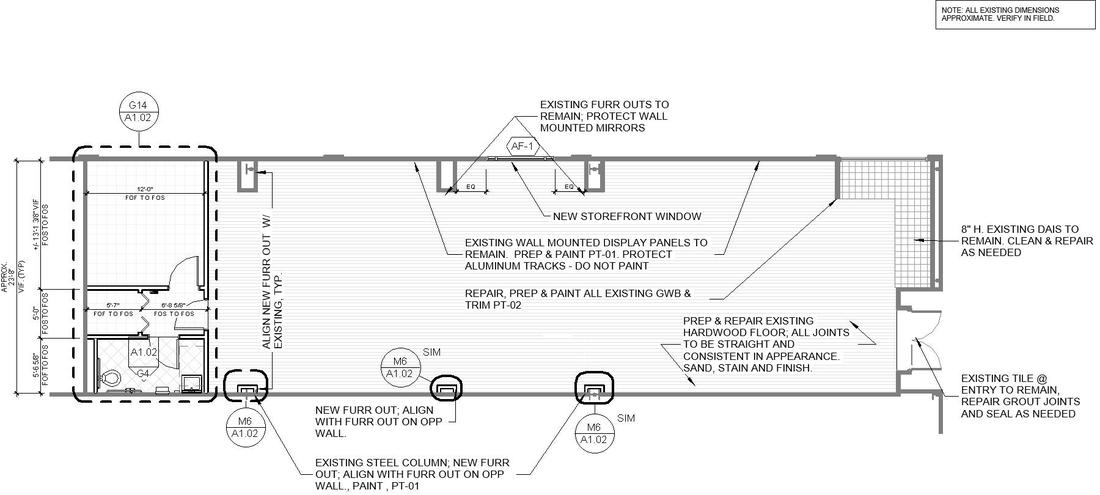
Our team was asked to take what had previously been a women's retail location in a Little Rock shopping mall and create a generic space that could be leased to a new tenant. The client was working with a very tight budget and wanted to retain as much of the original architecture of the space as possible. At the same time, the space needed to feel open and fresh - in order to appeal to new tenants. The space also needed to have a small back-of-house area to include a restroom, a small office and a storage area. 

Project budget: UNDISCLOSED
Project area: 1,921 square feet

Mall tenant space

Tenant Fit-Out
Picture
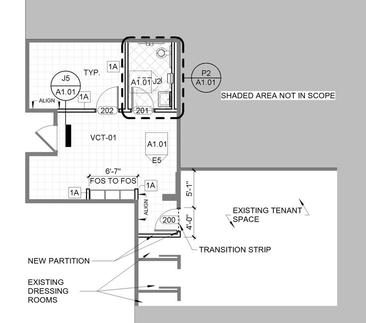
A popular Little Rock shopping mall asked our team to create a back-of-house for a vacant tenant space. The showroom was in excellent condition and did not need to be updated; however, the existing back-of-house was lacking an office, a restroom and adequate storage. Our task: create a generic back-of-house space in an oddly shaped footprint that could be leased to a new tenant; all while working with a very tight budget.

Project budget: UNDISCLOSED
Project area: 440 square feet

Mall tenant space:: little rock, arkansas

Tenant Fit-Out
Picture
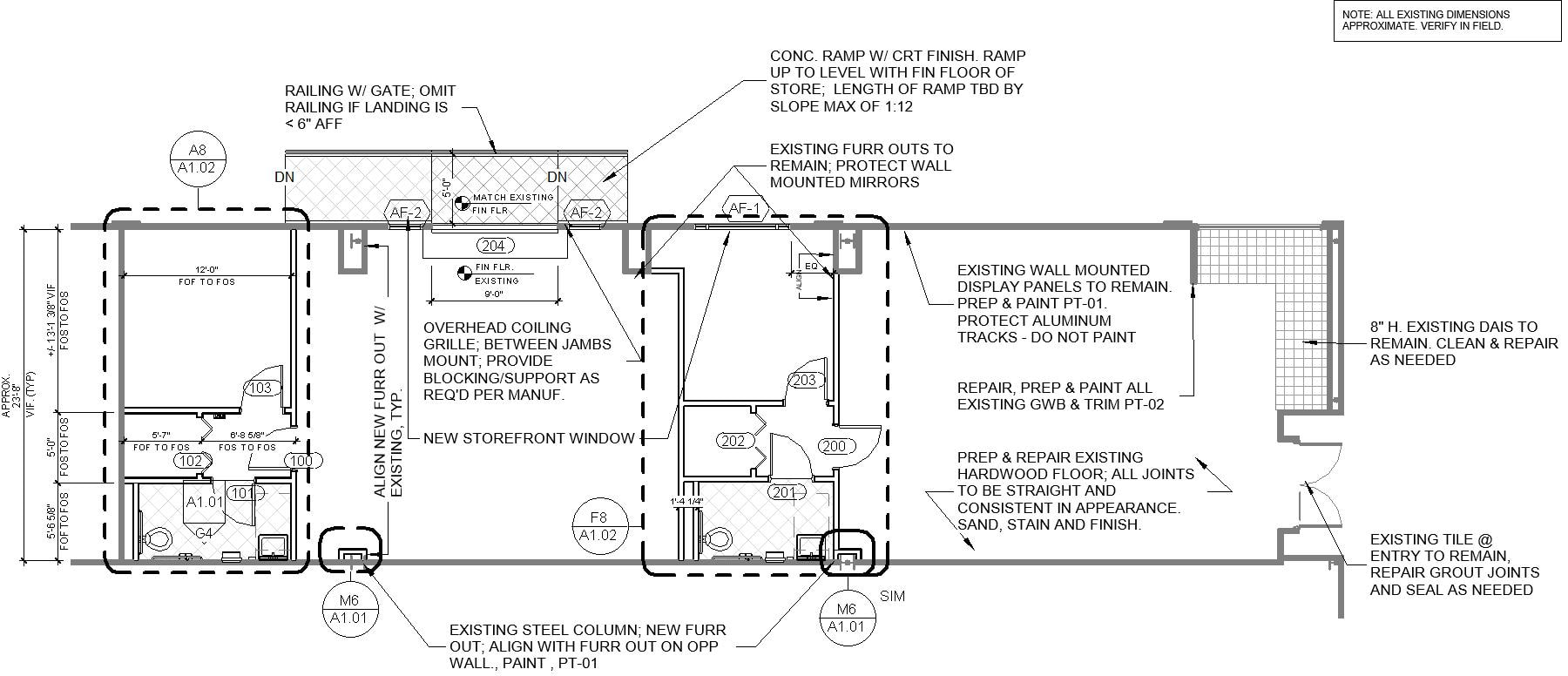
Our team was approached by a central Arkansas shopping mall to create two tenant spaces where only one had existed previously. Our task was to divide up the space in order to create a showroom and a back-of-house (which included an office, a restroom and adequate storage) for each new suite. Working with a limited budget, our design needed to be nondescript enough that it would appeal to the maximum amount of potential tenants.

Project budget: UNDISCLOSED
Project area: Suite "A" - 925 square feet; 
Suite "B" - 1050 square feet

​© 2017 - 2026  NOB A+D, PLLC
  • home
    • firm overview
    • technical expertise
    • contact
  • design team
    • Ngozi Onome' Brown, ​AIA, ASID, NOMA, NCARB, NCIDQ, ​​M. Ed., LEED® AP, EDAC, GPCP
    • Richard L. Scott, Jr.
    • Paulette Brown
    • Fabian Marks, Assoc. AIA
  • projects
  • community engagement
  • ventures
    • Wilmend
  • news
    • WALKER